Rodina


About Us
About Us
A little about us
We design & build digital products for amazing brands & businesses
Ether Creative is a small and agile team of five, based in the heart of Kent, with a deep passion for designing and building digital products that people genuinely love to use. We have a proven track record delivering consumer-facing apps, sports performance platforms, and data-driven tools for ambitious organisations.
We have hands-on experience in the sports technology space — having built and maintained TrainMyAthlete, an industry-leading athlete management and performance platform used by academies, coaches, and governing bodies worldwide. This means we understand the specific operational challenges of youth sports organisations: attendance, parent communication, data compliance, and keeping young athletes engaged.
All design, development, and project management is handled in-house. No outsourcing, no handoffs — just a focused team that cares about the outcome as much as you do. Our clients return, and they refer us, because we treat their product as our own.

How we work
How we work
How we work
We run lightweight engagements with clear milestones. We keep teams small, feedback frequent, and decision-making fast.
We value people over profits, quality over quantity, and understand that communication is key. As such, we deliver an unmatched working relationship with our clients. Our internal team of experts design and build sharp, high-functioning products — from pixel-perfect mobile interfaces to robust backend systems.
We work in the open and completely transparently. Using shared tools for project management, prototyping, and communication, we become an extension of your team rather than an external contractor. For a project like this, that means we will be embedded in your workflows — attending training sessions if useful, speaking directly with coaches, and testing early builds with real academy players and parents.
- Single point of contact and shared channel for async updates
- Weekly check-ins with demos and decisions captured
- Transparent scope, timeline, and change management
- Staging environment always available for your review before release
The Process
The Process
Our process
Six phases from discovery to launch, run across two parallel streams.
1. Discovery
We begin with a structured discovery sprint to establish shared understanding before writing a single line of code. For the Rodina project this involves workshops with coaches, administrators, and if possible a sample of players and parents to map user journeys across all four roles.
A critical discovery output is the CRM/AMS integration specification. We will review the Train My Athlete API (or your current AMS) in detail, mapping available endpoints against the data requirements for attendance sync, player profiles, and schedule import. This informs the API architecture and prevents integration surprises late in the project.
- Stakeholder workshops with coaches, admin, and sample users
- AMS/CRM API review and integration mapping
- Gamification rules workshop — XP values, level thresholds, badge categories
- Age group UX requirements (6–9 / 10–13 / 14–17)
- Technical architecture document and data model
2. Design
Design is where the product comes alive. We start from information architecture and user flows, then move to wireframes for each user role (player, parent, coach, admin). A key deliverable is a set of three age-adaptive UI skins — each sharing the same component structure but differing in colour density, icon scale, and information hierarchy.
The design system is built as a living component library that feeds directly into development, removing ambiguity and accelerating build time. All screens are prototyped interactively for review before any development begins.
- User flow diagrams for all four roles
- Low-fidelity wireframes across all key screens
- Interactive high-fidelity prototypes (mobile and web console)
- Three age-group UI skins (6–9, 10–13, 14–17)
- Component library and design system handoff
3. Backend API
The API is the backbone of the platform. We build a dedicated gamification service exposing a RESTful API consumed by both the mobile app and the web console. All core logic — XP allocation, level calculation, streak tracking, badge evaluation, and leaderboard ranking — lives here, making it independently testable and maintainable.
A separate integration module handles all communication with the AMS/CRM, insulating the gamification logic from third-party API changes. Authentication uses JWT with role-based access control across all four user types. All critical operations (attendance marks, XP changes, rule changes) are audit-logged.
- REST API with JWT auth and RBAC (player / parent / coach / admin)
- Gamification engine: XP events, level thresholds, badge rules, streak logic
- Weekly and seasonal leaderboard computation
- CRM/AMS integration layer with retry logic
- Push notification service (FCM/APNs)
- Admin configuration API (XP rules, badge management, churn thresholds)
- CI/CD pipeline, staging and production environments
4. Web Console
The web console provides the admin and coach interfaces that keep the platform running day-to-day. Coaches access Today's Group for fast attendance marking, task creation, and MOM vote management. Administrators access the gamification configuration panel, retention analytics, and churn-risk dashboards — all without requiring code changes.
- Admin dashboard: XP rules, badge config, churn-risk thresholds
- Retention analytics: cohort views, absence flags, activity trends
- Coach console: attendance register, task builder, MOM voting
- Player management: manual XP adjustments with audit log
5. Mobile App
We recommend React Native as the cross-platform framework, delivering a single codebase for iOS and Android with native performance. The app is structured around the four user roles, with the player experience at the centre: a home screen showing XP progress, active streak, current leaderboard position, and pending challenges.
Age-based UI adaptation is handled via a skin configuration derived from the player's date of birth — no manual switching required. Parents access a simplified read-only view of their child's progress and notifications.
- Player app: home, player card, leaderboard, challenges, notifications
- Coach view: attendance marking, task management, MOM voting trigger
- Parent view: child progress, attendance history, weekly report
- Age-adaptive skins (6–9 / 10–13 / 14–17)
- Push notification integration (deep-linked to relevant screens)
- App Store and Google Play submission
6. Launch & Handover
Launch includes a user acceptance testing period with real coaches and a pilot group of players, structured feedback collection, and a bug-fix sprint before the public release. We recommend a soft launch to a single squad before rolling out academy-wide.
Handover includes full technical documentation, a video walkthrough of the admin panel for your team, and a knowledge transfer session. We remain available for ongoing support under retainer post-launch.
- User acceptance testing with coaches and pilot player group
- App Store and Google Play submission and approval
- Technical documentation and admin panel walkthrough
- Post-launch support period included
Deliverables
- Fully functioning iOS and Android app (React Native)
- Web admin and coach console
- REST API with gamification engine and CRM/AMS integration
- Source code repository and CI/CD pipeline access
- Design files and component library (Figma)
- Technical documentation, runbooks, and training sessions

The Project
The Project
The Project
Our understanding of what you need and how we will build it.
Platform Overview
The Rodina platform is a gamified engagement layer sitting on top of the academy's existing CRM/AMS (such as Train My Athlete). Its core purpose is to increase attendance, retention, and motivation among youth academy players — primarily by turning the training process into a structured, rewarding progression system that players want to engage with.
The platform serves four distinct roles: players (the primary audience), parents (transparency and peace of mind), coaches (operational tools), and academy administrators (configuration and analytics). All four roles interact with the same data through purpose-built interfaces appropriate for each.
Gamification Engine
At the heart of the platform is an XP and levels system. Players earn XP (experience points) for concrete actions: attending training, participating in matches, completing challenges, submitting wellness forms, and improving test results. XP accumulates across a non-linear ten-level scale — from Beginner through to Legend — giving players a clear, long-term progression arc.
XP allocation rules are fully configurable by academy administrators via the admin panel — no code changes required. All rule changes are logged with a timestamp and author, providing a complete audit trail.
Attendance streaks add a second engagement loop: each consecutive attended session builds the streak, while excused absences (illness, holiday) preserve it. The streak is prominently displayed on the player's profile with a visual indicator, and coaches can link streak milestones to badge and XP rewards.
Badges & Achievements
Badges provide visual, shareable rewards that sit on the player profile permanently. They are organised into four categories: Attendance, Progress, Team, and Special. Each badge has a tier (bronze, silver, gold) and can be awarded automatically by the rules engine or manually by a coach.
Automatic badges fire when formal conditions are met — for example, completing five consecutive training sessions or recording a personal best on a fitness test. Manual badges give coaches discretion to reward character, attitude, or standout moments that no algorithm can detect. Every badge award triggers a push notification to the player and a summary in the parent's weekly report.
Leaderboards & Social
Leaderboards operate at two cadences: a weekly XP leaderboard (resetting every Monday) and a seasonal leaderboard running across the full academy season. The player view surfaces their own position plus three places above and below — enough social context to be motivating without being overwhelming for younger age groups.
The Player of the Session (MOM) mechanic adds a team-recognition layer. After each session, the coach can open a vote within the group; players vote for a team-mate (not themselves). The winner receives bonus XP and a temporary "MOM" badge. For the MVP this is a simple vote-count system — no anti-fraud complexity needed at this stage.
Seasonal leaderboard data is preserved in the database at season end, enabling historical analytics and cohort comparison over time, even as the active leaderboard resets.
Tasks & Challenges
Coaches can create individual or team tasks with a title, description, due date, XP reward (fixed or range), and an optional badge. Tasks can be assigned to specific players or entire groups. A weekly group challenge — one shared task for the whole squad — provides a collective motivation mechanic that complements individual competition.
Players see their active tasks on a dedicated screen with status indicators (new / in progress / completed / overdue) and the XP reward clearly displayed. Completion is marked manually by the coach for the MVP, with the option to connect automated triggers in a future phase.
Coach & Attendance Tools
The coach experience is designed for speed. The "Today's Group" screen shows the full squad list with photo and name; a single tap marks a player present or absent. When marking absent, the coach selects a reason: illness, excused, or unexcused. This distinction is critical — only unexcused absences reset the player's streak.
Coaches can also view attendance history for the group over any period, with a visualisation of the register. Export to CSV or PDF is planned as a post-MVP enhancement.
Parent Transparency
Parents receive a weekly summary notification covering their child's attendance, total XP, any new badges, current streak, and leaderboard position. Milestone notifications fire in real time — for example, "Nikita has earned the Player of the Match badge."
An at-risk flag triggers if a player shows a pattern of frequent unexcused absences. This flag is visible to both the coach and the administrator, enabling early intervention before a player drops out entirely. The threshold for triggering the flag (e.g. 2+ consecutive unexcused absences) is configurable by the admin.
Admin Panel & Analytics
The admin panel is the configuration layer for the entire gamification system. Administrators set XP event values, define badge award conditions, manage the level scale, and configure churn-risk thresholds — all without touching the codebase. A full audit log records every rule change with its author and timestamp.
Analytics include retention by cohort (month of joining, age group, team, coach), a list of players flagged as at-risk, and basic activity statistics by group and coach. This gives the academy management team the data to make informed operational decisions.
CRM/AMS Integration
A key requirement of the brief is seamless synchronisation with the existing CRM/AMS. We will build a dedicated integration module that keeps the gamification platform in sync without creating duplicate data entry.
Player profiles are linked one-to-one with their AMS athlete ID. Training schedules are imported from the AMS, with a manual fallback for creating sessions if the API does not support schedule export. Attendance marks made in the gamification system write back to the AMS where the API supports it. Wellness survey responses are available in the AMS dashboard or as an export.
The exact integration format will be confirmed once AMS API documentation is shared. We have built against Train My Athlete previously and are familiar with their data model.
Age-Based UX Adaptation
The brief specifies three age groups, each requiring a distinct visual and interaction approach. Rather than building three separate apps, we implement a "skin" system: the same component library renders with a different configuration derived from the player's date of birth. No manual selection required.
- 6–9 years: Bright colours, large icons, simple language. Focus on badges, streaks, and avatar. Minimal data density.
- 10–13 years: Leaderboard, XP, player card prominent. Access to MOM voting and challenges. Moderate data density.
- 14–17 years: Statistics, progress history, and match data at the forefront. Player card with detailed achievement history. Higher data density, closer to a performance dashboard.
Technical Architecture
We propose the following technology stack, chosen for performance, maintainability, and our existing expertise:
- Mobile: React Native (iOS and Android from a single codebase). Expo managed workflow for faster iteration and OTA updates.
- API: Node.js with TypeScript. RESTful architecture with JWT authentication and RBAC. PostgreSQL database. Hosted on AWS or GCP.
- Web Console: Next.js (React) — same technology stack as the API, enabling code sharing and reducing context switching.
- Push Notifications: Firebase Cloud Messaging (FCM) for Android, Apple Push Notification Service (APNs) for iOS, with an optional Telegram bot integration in Phase 2.
- Security: All children's personal data encrypted at rest. HTTPS enforced throughout. Designed to comply with GDPR and analogous data protection regulations.
The system is designed to handle up to 1,000 concurrent active users with API response times under 300ms at the 95th percentile, and 99.5% target uptime.


Budget
Budget
Project Budget
Fixed price across two delivery streams. Costs are based on the agreed scope.
Phase 1 — MVP
All stages below deliver the MVP scope defined in the brief, split across two parallel streams.
Stream 1 — Web App + API
Design, backend gamification engine, CRM/AMS integration, and web console for admins and coaches.
1.1 — Design & UX
| Discovery & Strategy | £750 |
| UX Research & Information Architecture | £1,050 |
| Wireframes & Prototypes | £1,500 |
| High Fidelity Designs (Mobile + Web Console) | £2,100 |
| Design System & Component Library | £600 |
| £6,000 |
1.2 — Backend API
| API Architecture & Infrastructure | £1,650 |
| Authentication & Role Management (JWT, RBAC) | £1,500 |
| Gamification Engine (XP, Levels, Badges, Streaks, Leaderboards) | £3,750 |
| Attendance & Session Management | £1,650 |
| CRM/AMS Integration Layer | £2,300 |
| Push Notifications Service | £1,250 |
| Admin Panel & Analytics API | £1,650 |
| Testing, CI/CD & Deployment | £1,250 |
| £15,000 |
1.3 — Web Console (Admin & Coach)
| Admin Dashboard & Gamification Config | £2,750 |
| Coach Console (Attendance, Tasks, MOM Voting) | £2,250 |
| Testing & Launch | £1,000 |
| £6,000 |
Stream 2 — Mobile App
React Native iOS and Android app across all four user roles, with age-adaptive UI and App Store submission.
1.4 — React Native App
| Player App (Home, Profile, Leaderboard, Challenges) | £13,000 |
| Coach & Parent Views | £4,000 |
| Age-Based UI Adaptation (3 skin configs) | £2,500 |
| Push Notifications & Deep Linking | £1,250 |
| App Store Submission & QA | £1,250 |
| £22,000 |
Costs are fixed based on the feature specification detailed in this proposal. Requests outside the agreed scope may be subject to additional costs. A change management process will be agreed at project kick-off. Hours are based on an eight-hour working day.
Timeline
Timeline
Project Timeline
Indicative delivery dates. Streams 1 and 2 run in parallel from Phase 2 onwards.
Assumes a start date of 01.06.2026. All stages below deliver Phase 1 (MVP) of the brief, split across two parallel streams. Stages 1.3 and 1.4 overlap with 1.2 to compress the overall timeline.
Phase 1 — MVP
Stream 1 — Web App + API
1.1 — Design & UX
| Discovery & Strategy | 08.06.2026 |
| UX Research & Information Architecture | 15.06.2026 |
| Wireframes & Prototypes | 29.06.2026 |
| High Fidelity Designs | 12.07.2026 |
| Design System | 19.07.2026 |
1.2 — Backend API
| API Architecture & Infrastructure | 05.07.2026 |
| Authentication & Role Management | 19.07.2026 |
| Gamification Engine | 17.08.2026 |
| Attendance, CRM/AMS Integration & Notifications | 07.09.2026 |
| Admin Panel API, Testing & Deployment | 21.09.2026 |
1.3 — Web Console
| Admin Dashboard & Gamification Config | 04.10.2026 |
| Coach Console | 18.10.2026 |
| Web Console Testing & Launch | 25.10.2026 |
Stream 2 — Mobile App
1.4 — React Native App
| Player App (iOS & Android) | 24.08.2026 |
| Coach & Parent Views | 14.09.2026 |
| Age-Based UI Adaptation | 28.09.2026 |
| App Store Submission & QA | 01.11.2026 |
Assumes a start date of 01.06.2026. Design completes mid-July. API development begins in parallel from week three, with mobile development starting late July alongside the API build. Web Console and mobile QA run concurrently through October, with App Store submission and launch targeted for 01.11.2026 — five months from kick-off. Timeline may flex subject to AMS API availability, stakeholder review cycles, and App Store approval timelines.
Ongoing Costs
Ongoing Costs
Ongoing Costs
Indicative monthly costs post-launch. We can tailor retainers for ongoing support.
The table below outlines indicative monthly running costs for the platform once live. Infrastructure costs vary with usage; figures below represent a typical mid-scale academy deployment.
Optional Support Retainer
| Updates, Maintenance & Bug Fixes | £150 |
| Suggested Design & Development Retainer (1 day/month) | £800 |
| £950 |
Infrastructure costs are illustrative and will be confirmed once the expected player count and usage patterns are known. The support retainer is optional but recommended — it covers routine dependency updates, OS compatibility testing after Apple/Android releases, and the capacity to respond to coach and admin requests quickly. A full SLA document can be provided upon request.
References
References
Design references informing the Rodina product.
Design References
Apps we are drawing inspiration from. Images to be added by the client.
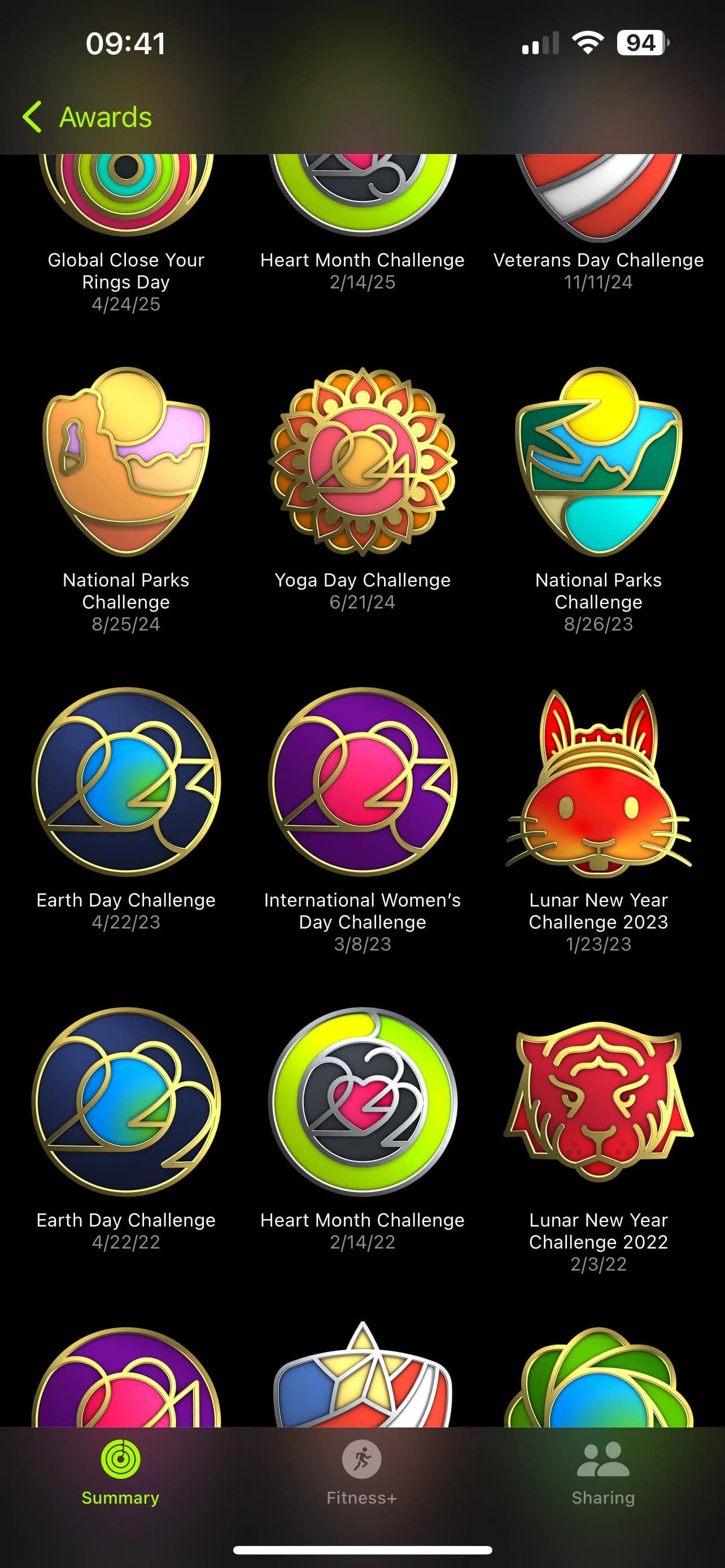
- Apple Fitness / Activity RingsThe benchmark for progress ring UI and clean, motivating data presentation. We are referencing this for the player's XP and streak progress indicators — data-dense but never overwhelming.
- DuolingoThe industry gold standard for gamification in a consumer app: XP, streak counters, weekly leaderboards, and level-up celebrations. Directly parallel to the Rodina brief. Particularly relevant for the 10–13 age group.
- Nike Training ClubAchievement badges, coaching workflows, and activity tracking with a clean sports aesthetic. Reference for how a professional brand handles gamification without it feeling juvenile.
- EA FC / FIFA Ultimate TeamPlayer card concept and XP-driven progression system. Instantly recognisable to the football audience at all age groups. We are referencing the player card visual format for the Rodina profile screen.
- Fortnite Battle PassLevel progression with reward reveals at each milestone. Highly effective engagement loop for the 14–17 age group — the anticipation of the next reward is as motivating as the reward itself.
- Kahoot!Fast-paced, colourful, and competitive. A reference for the 6–9 age group UI skin: large tap targets, bright colours, and instant feedback. Shows that high engagement and simplicity are complementary.
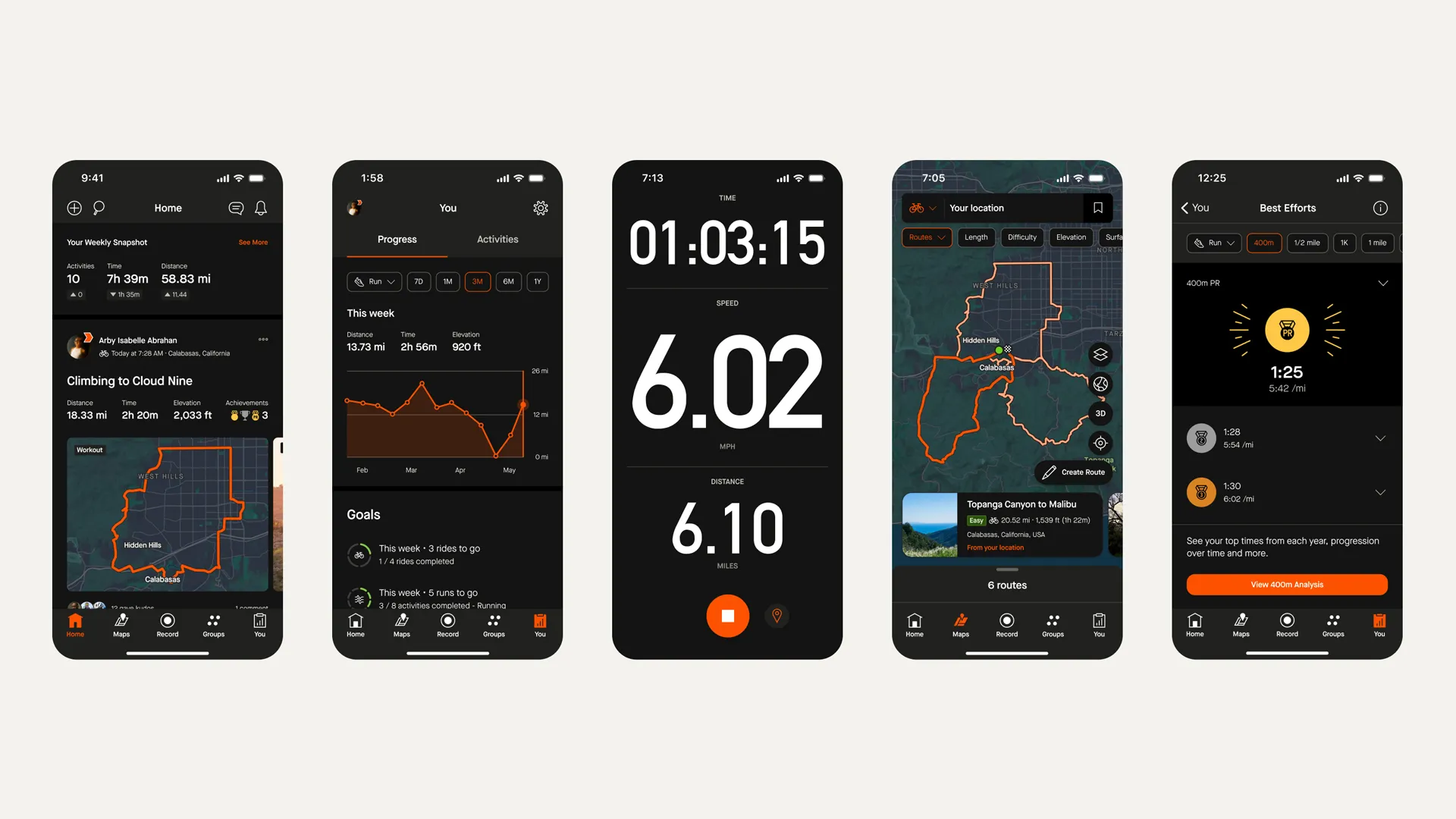
- StravaSocial leaderboards, segment challenges, and the kudos mechanic. Reference for the older teen audience (14–17) who appreciate a more data-rich, performance-focused experience with a social layer.